

Discolored grout is one of the most common problems homeowners notice in bathrooms, kitchens, laundry rooms, and other tiled spaces where humidity lingers. Even when tile surfaces look clean, grout lines can darken, yellow, develop blotchy patches, or take on a pink, brown, gray, or black appearance that makes the entire surface look older than it is.
In humid climates, grout faces constant exposure to moisture in the air, slow evaporation, and organic buildup. Understanding what causes grout discoloration is the first step toward preventing stains, mildew growth, and long-term damage to tiled areas.
The Moisture Conditions That Make Grout Vulnerable
Grout is naturally more porous than most tile materials, especially if it has not been sealed properly or if the sealer has worn away over time. In humid climates, moisture does not dry as quickly from grout lines, which means water can remain trapped in tiny pores for extended periods. This creates the ideal environment for staining agents, soap residue, minerals, and microorganisms to settle into the surface.
Humidity also affects how often grout becomes damp, even when there is no direct water spill or shower spray. Warm, moist air can condense on cooler tile surfaces, especially in bathrooms with poor ventilation. As that condensation collects along grout joints, it can repeatedly feed discoloration and make routine cleaning less effective.
Why porous grout absorbs stains so easily
Cement-based grout contains microscopic openings that can absorb water, cleaning products, body oils, and mineral deposits. Once these materials penetrate below the surface, they can be difficult to remove with basic wiping. This is why grout discoloration often returns shortly after cleaning if the underlying moisture problem is not addressed.
Unsanded and sanded grout can both discolor, but sanded grout often has a slightly rougher texture that can hold onto dirt and residue more visibly. In high-humidity rooms, that texture can trap a combination of moisture and debris, creating darker lines in traffic areas, shower corners, and around sinks.

The role of slow drying time
Fast drying is one of the best defenses against grout staining. In humid climates, however, the air already contains significant moisture, so evaporation slows down. This means grout may stay damp for hours after a shower, mopping, cooking, or general household activity.
When grout remains damp, it becomes more likely to support mildew, surface mold, and bacterial growth. These organisms can produce dark, speckled, pink, or orange discoloration depending on the type of buildup and the conditions in the room.
Common Causes of Grout Discoloration in Humid Areas
Not all grout discoloration comes from the same source. Some stains are caused by organic growth, while others come from minerals, cleaning habits, or worn sealant. Identifying the likely cause can help determine the best prevention strategy and reduce the chances of repeated staining.
In humid environments, several causes often overlap. For example, a shower with poor ventilation may also have soap scum buildup, hard water deposits, and weakened grout sealer. Together, these conditions can make grout lines appear uneven, dirty, or permanently stained even when the tile itself looks clean.
Mold, mildew, and biofilm
Mold and mildew are among the most recognizable causes of grout discoloration in humid climates. They often appear as black, gray, green, or dark brown spots, especially in shower corners, along tub surrounds, and near floor edges where water collects. Mildew typically grows on the surface, while mold may become more stubborn if moisture is trapped behind or within the grout.
Biofilm can also contribute to discoloration. This thin layer of microorganisms, soap residue, skin oils, and moisture can develop on grout in damp environments. It may feel slick or look pinkish, orange, or yellow, particularly in showers and around drains.
Soap scum, body oils, and cleaning residue
Soap scum forms when soap combines with minerals in water, creating a sticky film that clings to tile and grout. In humid spaces, this film may not dry fully or rinse away easily, allowing it to attract dirt and deepen discoloration. Over time, grout lines can appear gray, tan, or patchy.
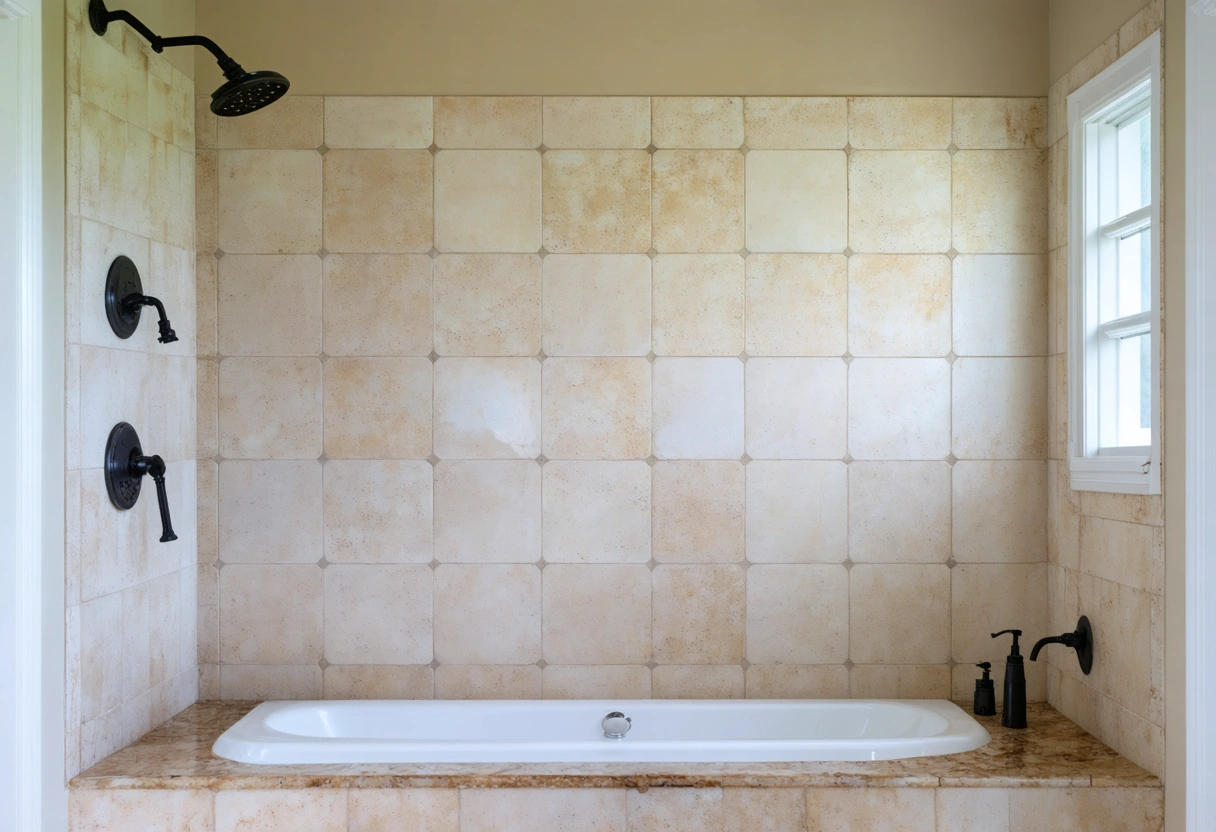
Body oils, shampoos, conditioners, and skincare products can also settle into grout pores. If the grout is unsealed or poorly sealed, these residues may penetrate more deeply and become harder to remove. Certain cleaning products can make the problem worse by leaving behind a residue that traps additional grime.
Hard water minerals and efflorescence
Hard water can leave mineral deposits on grout, especially in showers, kitchen backsplashes, and tiled floors that are frequently mopped. These deposits may appear white, chalky, cloudy, or yellowish. In humid climates, mineral buildup can remain damp and combine with other residue, making grout look dull and uneven.
Efflorescence is another moisture-related issue that can affect grout. It occurs when water moves through cement-based materials and carries salts to the surface. As the water evaporates, it leaves behind a powdery white deposit. While
While efflorescence is not the same as mold, it is a clear sign that moisture is traveling through the grout or the tile assembly. If the moisture pathway is not corrected, the white residue may return after cleaning.
Improper installation or curing
Grout can discolor earlier than expected when it was mixed with too much water, installed unevenly, or cleaned aggressively during installation. Excess water weakens cement-based grout and can create a more porous surface. Overwashing newly installed grout can also pull pigments from the joints, leaving a faded, blotchy, or washed-out appearance.
Curing conditions matter as well. In humid climates, grout may take longer to cure fully, particularly in enclosed bathrooms or areas without good air movement. If the grout is sealed too soon, moisture may become trapped beneath the sealer. This can cause cloudy areas, uneven color, or premature sealer failure.

How Humidity Changes the Cleaning Equation
Cleaning grout in a humid climate requires a slightly different mindset than cleaning grout in a dry climate. The goal is not only to remove visible dirt, but also to reduce moisture retention and prevent residues from feeding future discoloration. A grout line that looks clean today can darken again quickly if it remains damp and coated with invisible buildup.
Many homeowners scrub more aggressively when grout starts to discolor, but harsh scrubbing is not always the best solution. Stiff metal brushes, abrasive powders, and overly acidic products can roughen grout, weaken sealers, or open the surface further. Once grout becomes more porous, it absorbs moisture and stains even faster.
Why bleach is not always the best long-term answer
Bleach can lighten some surface stains and may temporarily reduce mildew appearance, but it does not solve the underlying humidity problem. On porous grout, bleach solutions may fade discoloration at the surface while leaving embedded residue behind. If moisture, soap scum, and poor ventilation remain, the dark or pink stains often return.
Repeated use of strong bleach solutions can also affect nearby materials, including colored grout, natural stone, metal fixtures, and caulk. In some situations, it may contribute to a cycle where grout looks brighter for a short time but becomes more vulnerable because the surface and surrounding sealants are repeatedly stressed.
Better cleaning habits for humid rooms
A pH-neutral tile and grout cleaner is usually a safer routine choice for sealed grout. It helps remove oils and light soil without stripping the sealer as quickly as harsh chemicals. For showers, cleaning more frequently with a gentle product is often more effective than waiting until heavy staining appears.
Rinsing is especially important. Cleaner residue left on grout can become sticky and attract soil. After cleaning, grout should be rinsed with clean water and dried as much as practical.

Prevention Strategies That Work in Humid Climates
Preventing grout discoloration begins with controlling moisture. Even the best grout cleaner cannot compensate for a room that stays damp day and night. In bathrooms, exhaust fans should be used during showers and kept running afterward long enough to clear humid air.
Air circulation matters in kitchens, laundry rooms, and tiled entryways as well. Ceiling fans, open doors, dehumidifiers, and properly functioning HVAC systems can all help reduce moisture levels.
Seal grout correctly and reseal on schedule
Sealing is one of the most important steps for protecting cement-based grout. A quality penetrating sealer helps reduce absorption, making it harder for water, oils, and staining agents to enter the pores.
Resealing schedules depend on location, use, cleaning products, and grout type. Shower grout and busy kitchen floors may need resealing more often than low-use wall tile.
Choose the right grout for wet and humid spaces
When installing new tile or replacing old grout, material selection can reduce future discoloration. Epoxy grout is far less porous than traditional cement-based grout and is highly resistant to stains, water absorption, and many household chemicals.
High-performance cement grouts and premixed grouts may also offer improved stain resistance compared with basic cement grout. The best choice depends on the tile type, joint width, location, budget, and installer experience.
Control water at the source
Small water problems can create major grout discoloration over time. A slow plumbing leak behind a wall, a dripping showerhead, poorly sealed tub edges, or cracked caulk can keep grout damp even when the room appears dry.

Caulked joints deserve special attention because corners and changes of plane move differently than flat grout joints. If caulk is cracked, peeling, or separated, water can enter behind tile and create hidden moisture problems.
When Discoloration Signals a Bigger Problem
Some grout discoloration is cosmetic, but some indicates an underlying moisture issue. Warning signs include grout that stays dark even after drying, musty odors, soft or crumbling joints, loose tiles, recurring mold in the same spot, or staining that appears to spread from behind the tile.
If grout is cracked, missing, powdery, or deeply stained, cleaning alone may not restore it. Regrouting may be necessary when the existing material has lost integrity.
Color restoration versus regrouting
For structurally sound grout that is permanently stained, grout colorant may be an option. Colorants are topical coatings designed to create a uniform appearance while adding a layer of stain resistance.
Regrouting is a better choice when grout is deteriorated, unevenly missing, contaminated, or no longer bonded well. Although it is more labor-intensive,
Need help with Why Grout Turns Discolored in Humid Climates and How to Prevent It?