
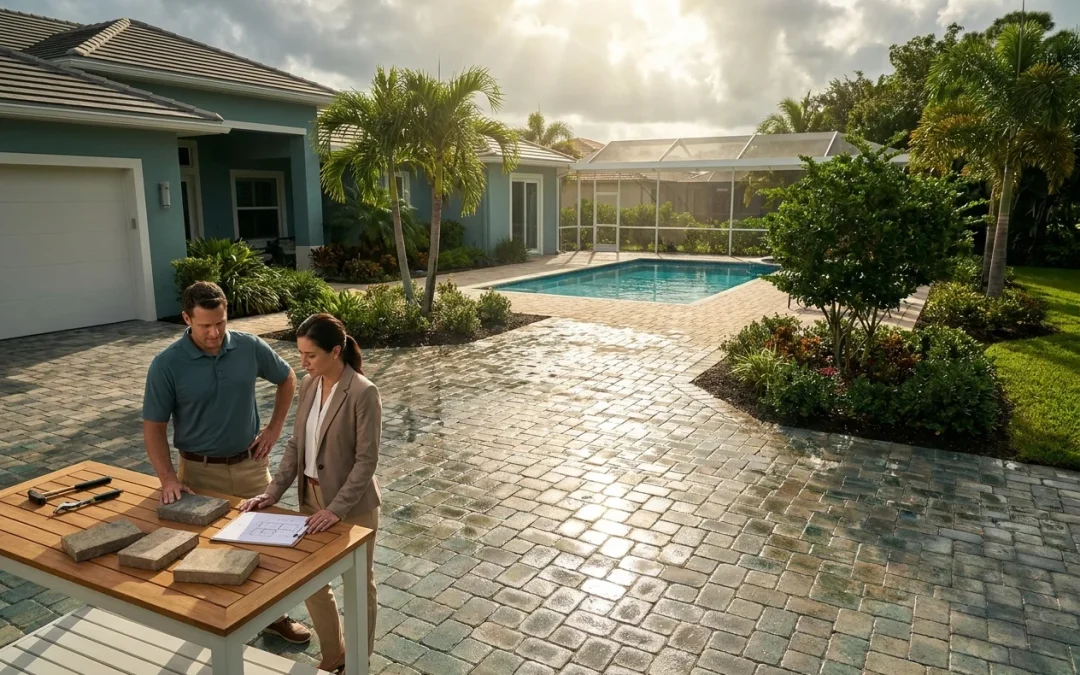
Florida pavers face environmental pressures that are very different from those in cooler or drier regions. Intense sunlight, heavy rain, high humidity, salt exposure, and year-round organic growth can gradually affect the appearance and stability of driveway, patio, and pool deck surfaces.
Understanding how these conditions affect concrete, brick, and natural stone pavers can help homeowners and property managers across Lee, Charlotte, and Sarasota Counties prevent avoidable damage. Timely cleaning, joint stabilization, repairs, and professional sealing can preserve both the performance and curb appeal of an outdoor paved area.
The Florida Weather Conditions That Put Pavers to the Test
Pavers are durable, but they are not unaffected by the climate around them. In Southwest Florida, outdoor surfaces experience frequent cycles of intense heat followed by sudden rain. Moisture can enter porous pavers and joints, while high temperatures accelerate evaporation at the surface. Over time, these changing conditions can contribute to staining, joint sand loss, surface deterioration, and movement within the paved area.
The amount of exposure varies by location. A shaded patio may retain moisture and develop organic growth, while an uncovered driveway may experience stronger ultraviolet exposure and heavier vehicle loads. Pool deck pavers also encounter chlorinated or saltwater splashes, sunscreen residue, and frequent foot traffic. Each setting requires maintenance based on its particular combination of moisture, heat, contaminants, and use.
Intense Sunlight and Surface Fading
Florida’s strong ultraviolet rays can gradually fade the color of manufactured pavers, especially on driveways and patios with little shade. The surface may begin to look pale, chalky, or uneven when some areas receive more sunlight than others. Older coatings can also lose their clarity or wear irregularly if they were not suitable for the material and level of exposure.
A compatible paver sealer can help reduce color loss and protect the surface from some environmental contaminants. However, proper preparation is essential. Applying sealer over dirt, trapped moisture, efflorescence, or biological growth may produce a cloudy or inconsistent finish rather than improving the appearance.
Heavy Rain and Joint Sand Erosion
Seasonal downpours can wash sand from the joints between pavers, particularly where drainage directs water across the surface. Pressure from roof runoff, downspouts, or poorly graded landscaping can intensify this erosion. As joints lose material, pavers may become less stable and more vulnerable to shifting, rocking, or separating.
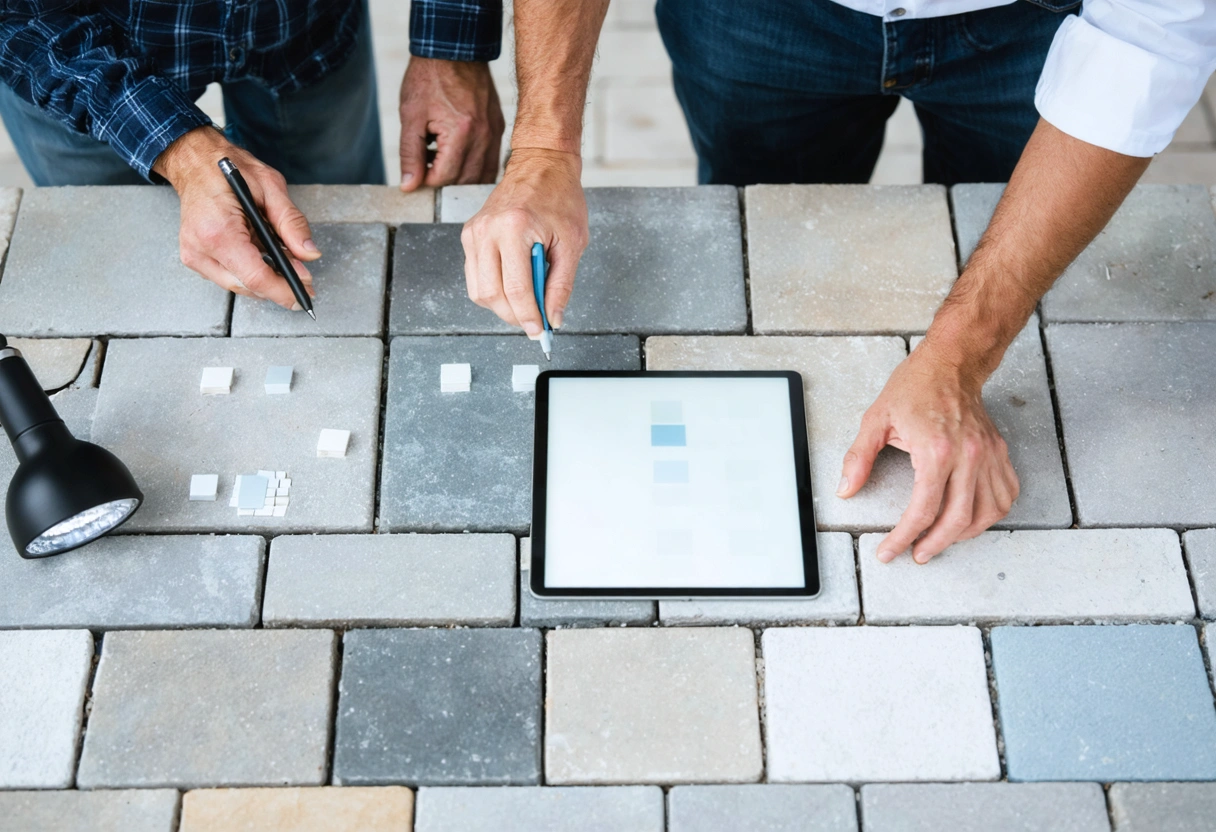
Missing joint sand also creates spaces where weeds can take root and insects can disturb the base. Replenishing the joints and addressing the source of concentrated water flow can help maintain interlock. In suitable installations, professional sealing may further stabilize joint sand and reduce how easily it is displaced.
Moisture, Humidity, and Organic Growth
Florida’s humid environment allows algae, mold, mildew, and other organic matter to develop quickly on outdoor hardscapes. These growths are especially common in shaded areas, near irrigation systems, beneath trees, and around pool decks where surfaces are frequently wet. They can make pavers look dark, blotchy, or neglected even when the material itself remains structurally sound.
Organic buildup is more than a cosmetic concern. Algae and similar growth can create a slick surface when wet, increasing the risk of slips around pools, patios, and walkways. Regular cleaning helps manage this issue, but the cleaning method must be appropriate for the paver material, joint condition, and existing sealer.
Why Some Areas Stay Wet Longer
Low spots, poor drainage, compacted landscaping, and clogged deck drains can allow water to remain on or beneath pavers. Persistent moisture may soften the base, encourage settling, and create recurring discoloration. Irrigation overspray can add to the problem by wetting the same sections every day and depositing minerals that leave visible residue.
Correcting drainage and irrigation issues is often necessary before surface treatments are applied. Cleaning or sealing alone cannot resolve movement caused by an unstable base or constant water intrusion. A complete evaluation should consider the paver surface, joints, edge restraints, drainage pattern, and surrounding landscape.
Salt, Pool Water, and Mineral Deposits
Coastal air and saltwater pool systems can expose pavers to salts that remain after moisture evaporates. Chlorinated water, hard irrigation water, and dissolved minerals may also leave light colored deposits or contribute to uneven staining. Natural stone can be particularly sensitive to certain chemicals, so cleaning products must be selected carefully.
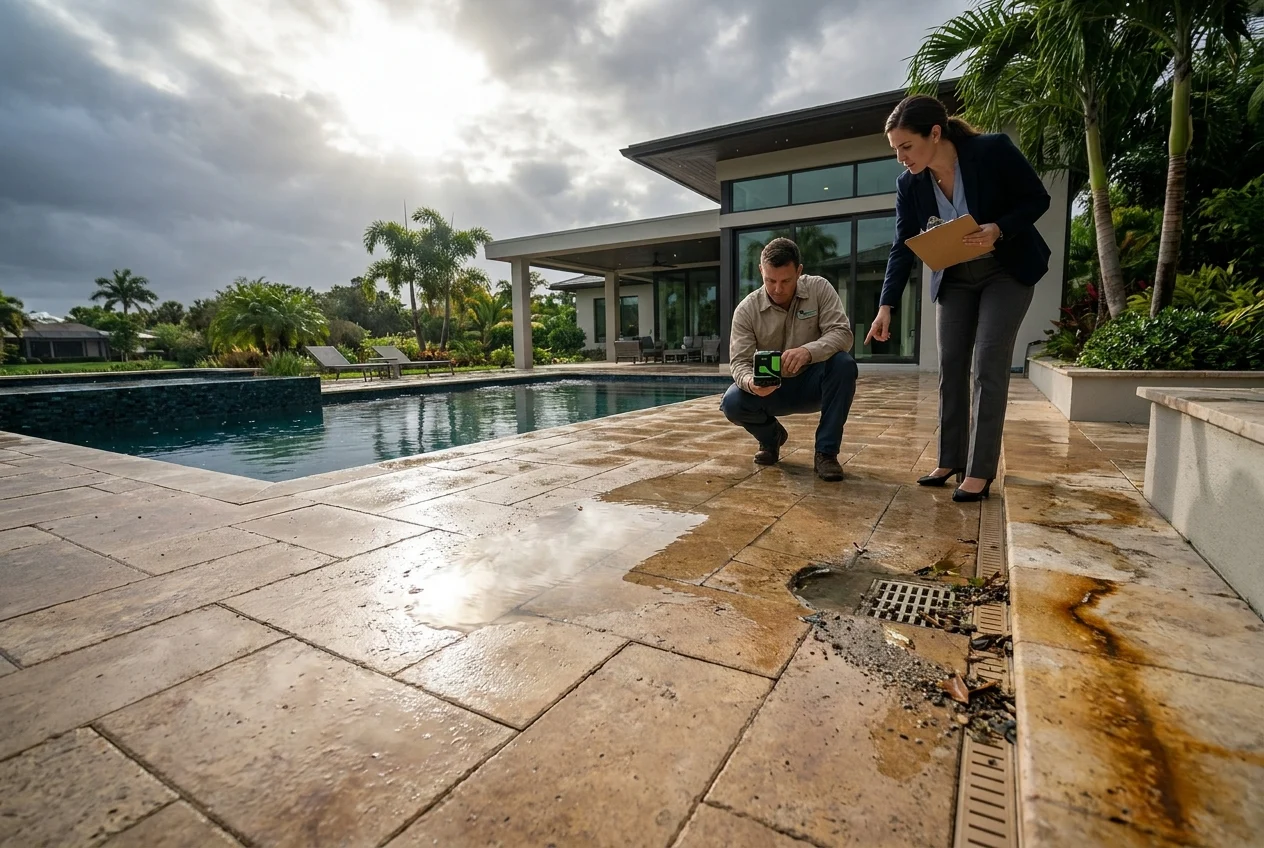
Efflorescence can appear as a white, powdery film when soluble salts migrate through masonry materials and reach the surface. It should be identified correctly before cleaning because it differs from mold, ordinary dirt, and sealer haze. Using the wrong treatment can fail to remove the deposit or alter the paver’s finish.
Heat, Expansion, and Paver Movement
Driveway, patio, and pool deck pavers absorb substantial heat during Florida’s sunniest months. Darker materials can become especially hot, while repeated heating and cooling causes minor expansion and contraction throughout the paved area. A properly installed flexible paver system is designed to accommodate some movement, but inadequate joints, weak edge restraints, or an unstable base can allow shifting to become visible.
Common signs of movement include widened joints, crooked lines, rocking units, raised edges, and localized depressions. These conditions should be evaluated early because movement can spread as traffic, rainfall, and erosion continue. Raised or uneven pavers can also create trip hazards around walkways, patios, and pool decks.
Why Edge Restraints Matter
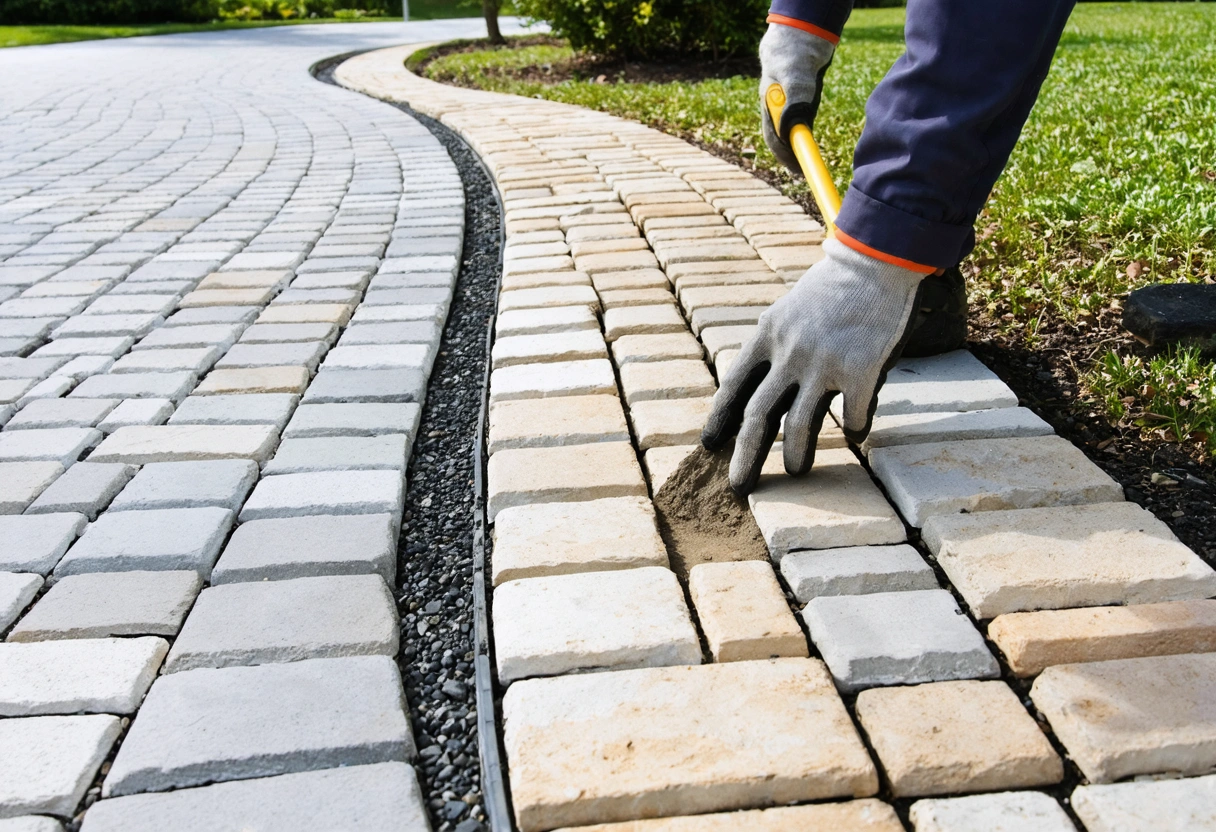
Edge restraints help keep an interlocking paver surface contained. If an edge restraint loosens, cracks, or separates from the installation, the outside rows can begin to spread. Joint sand then escapes more easily, reducing support between neighboring pavers.
Damage is often found beside driveways where vehicles repeatedly pass over the edge, near landscaping where roots or soil movement create pressure, and along pool decks where drainage conditions affect the perimeter. Repair may involve resetting affected pavers, restoring the base, replacing joint material, and securing the perimeter before the area is sealed.
Tree Roots and Shifting Soil
Florida landscapes often include palms, oaks, and other trees planted near paved areas. As roots grow, they can lift pavers or create ridges beneath the surface. Removing and resetting the visible pavers without addressing the root pressure may provide only temporary improvement.
Soil conditions can also influence settlement. Water moving beneath a paved area may carry away fine base material, while poorly compacted fill can settle under vehicle loads. A lasting repair requires identifying whether the movement is being caused by roots, drainage, base failure, or a combination of factors.
How Climate Effects Differ by Paved Area
Although all exterior pavers face Florida’s heat and moisture, the type of use changes the most likely maintenance concerns. A driveway must withstand vehicle weight and automotive residue. A patio may be shaded by trees or screened enclosures.
Driveway Pavers
Driveways typically experience the greatest load. Loose joints, poor base compaction, or drainage problems can become more noticeable beneath tire paths and turning areas. Oil, transmission fluid, rust, fertilizer, and tire marks may penetrate porous pavers if they are not addressed promptly.
Cleaning methods must remove contamination without dislodging excessive joint sand or etching the surface. If a vehicle leak causes a deep stain, complete removal may not always be possible.
Patio Pavers
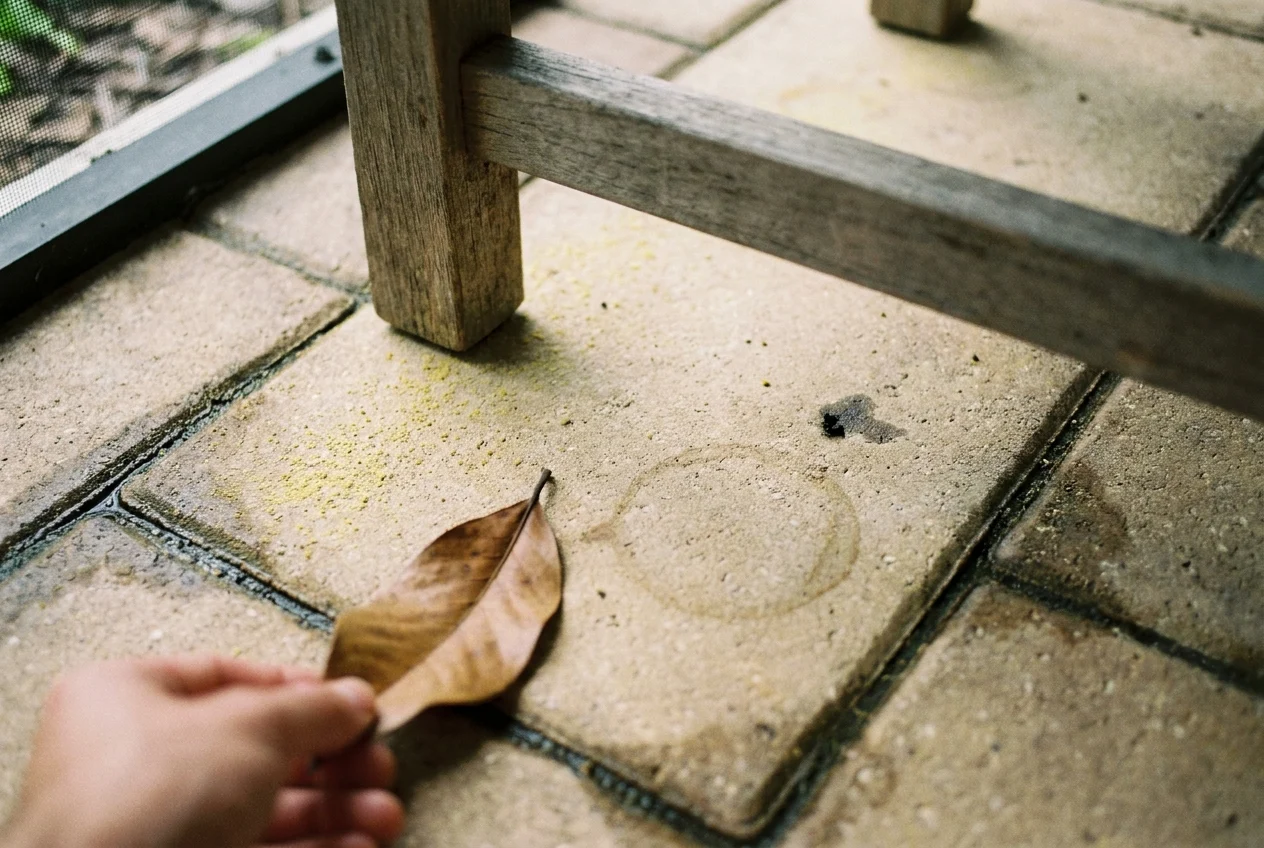
Patios beneath trees, lanais, or screened structures often receive less direct sunlight and dry more slowly. Fallen leaves, pollen, food spills, grill grease, and furniture can produce uneven staining.
Moving furniture and planters periodically allows hidden areas to dry and makes early staining easier to detect. Property owners should also avoid placing hot equipment directly on sealed pavers because concentrated heat can discolor or damage some coatings.
Pool Deck Pavers
Pool decks require particular attention to traction and chemical compatibility. Algae, sunscreen, body oils, and pool water can create slippery residue. At the same time, highly aggressive cleaning or an unsuitable glossy sealer may make the surface less comfortable or less slip resistant when wet.
Loose, sunken, or raised pavers near coping and deck drains should be corrected promptly. Pool deck movement may interfere with drainage or create a tripping point where people are frequently barefoot.
Tropical Storms and Hurricane Season
Heavy storms can expose weaknesses that remain unnoticed during ordinary rainfall. Wind driven rain, overflowing gutters, clogged drains, and saturated soil may send large volumes of water across or beneath paved surfaces.
After severe weather, paver areas should be inspected for standing water, settlement, loose borders, open joints, and debris blocking drainage routes. Coastal properties may also need prompt rinsing or cleaning after saltwater exposure.
Sealer does not make a paver installation floodproof. It can reduce surface absorption and help stabilize compatible joint sand, but it cannot compensate for failed drainage, severe base erosion, or prolonged hydrostatic pressure.
Choosing the Right Cleaning Approach
Florida pavers benefit from routine cleaning, but more pressure is not always better. Excessive pressure can scar concrete pavers, open the pores of the surface, dislodge joint sand, or damage softer natural stone.
A professional cleaning process considers the type and age of the pavers, the condition of the joints, the presence of an existing coating, and the source of each stain.
Why Household Chemicals Can Cause Problems
Strong bleach mixtures, acidic cleaners, and unapproved degreasers may alter paver color, damage vegetation, corrode nearby metals, or react with an existing sealer. Natural stone surfaces can be especially vulnerable to acidic products.
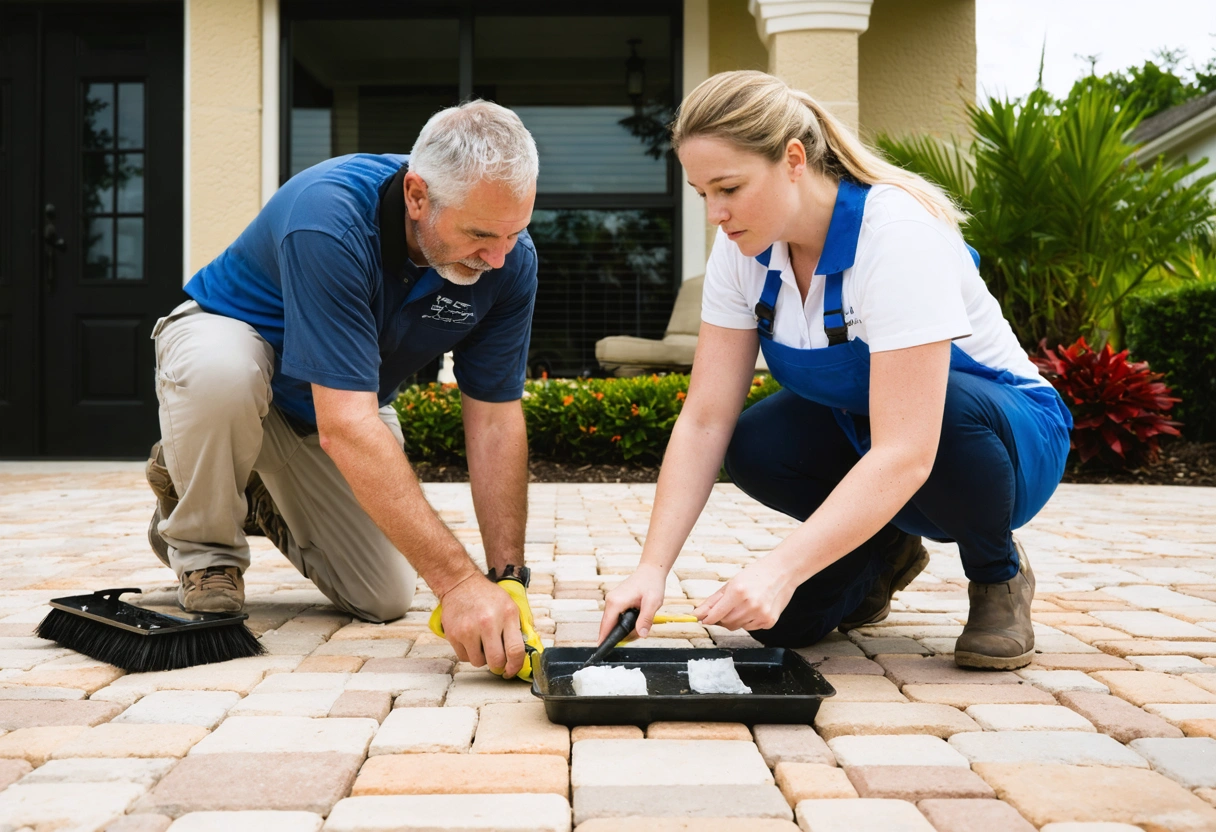
When a stain cannot be identified confidently, professional evaluation is safer than repeated chemical applications. Residue from an incorrect product may complicate later cleaning and interfere with sealer adhesion.
The Role of Professional Paver Sealing
Properly selected and applied sealer can help protect pavers from moisture absorption, ultraviolet exposure, spills, and recurring surface contamination. It may also enhance color and make routine maintenance easier.
Sealer performance depends heavily on preparation and weather conditions. Pavers must be thoroughly cleaned, adequately rinsed, and allowed to dry according to the product requirements.
Sealer Type and Finish
Different products create different results. Penetrating sealers generally protect below the surface with minimal visual change, while film forming products may deepen color or add sheen.
A high gloss appearance is not appropriate for every setting. Around pools and other frequently wet areas, traction must remain a priority. Additives and compatible products may improve slip resistance, but no sealed surface should be assumed to be slip proof.
When Pavers Should Be Resealed
There is no single resealing schedule that applies to every Florida property.
Need help with How Florida’s Climate Affects Driveway, Patio, and Pool Deck Pavers?

