
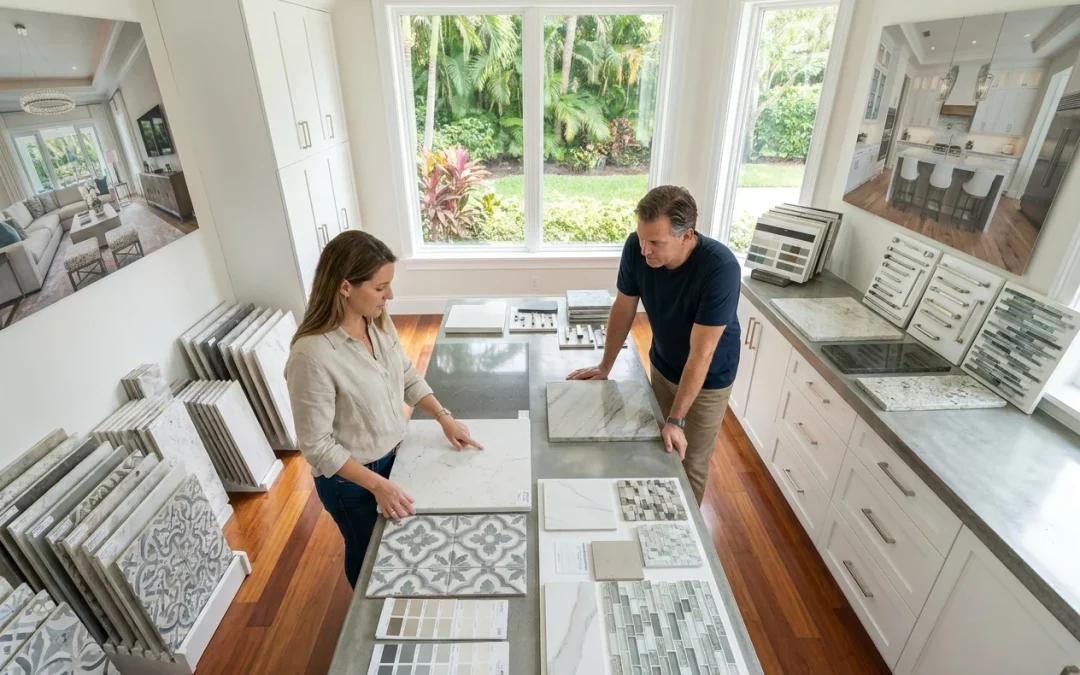
A backsplash does more than fill the space between a countertop and cabinets. In a kitchen or bathroom, it protects walls from water, grease, soap, stains, and daily wear while also shaping the overall style of the room.
The right material depends on how the space is used, how much maintenance you are willing to do, and the look you want to achieve. By understanding the practical strengths and tradeoffs of common backsplash materials, you can make a choice that feels beautiful, durable, and well suited to your home.
Start With the Room’s Daily Demands
Before comparing colors, patterns, or tile shapes, consider what your backsplash needs to handle every day. A kitchen backsplash behind a range or cooktop is exposed to heat, oil splatter, tomato sauce, steam, and frequent cleaning. A bathroom backsplash usually faces water droplets, toothpaste, cosmetics, soap residue, and humidity. These different conditions can influence which materials will perform best over time.
In a busy cooking area, nonporous or well sealed materials are often the most practical because they resist staining and wipe clean more easily. Ceramic tile, porcelain tile, glass tile, and certain slab materials are popular choices for this reason. In a powder room or guest bathroom, where the backsplash may not face heavy moisture or constant scrubbing, you may have more flexibility to use decorative stone, handmade tile, or other materials with a softer finish.
Think About Moisture, Heat, and Cleaning Frequency
Moisture resistance is especially important near sinks, vanities, and food prep areas. Materials that absorb water can discolor, develop mildew in unsealed areas, or require more careful upkeep. Natural stone, cement tile, and some porous handmade tiles can still be excellent options, but they usually need proper sealing and routine maintenance to stay in good condition.
Heat exposure is another factor in kitchens. Most tile materials tolerate normal kitchen heat well, but some finishes, adhesives, or specialty panels may not be ideal directly behind a stove. If you cook often, choose a backsplash surface that can handle regular wiping with mild cleaners without losing its finish or becoming difficult to maintain.
Compare Popular Backsplash Materials
Each backsplash material offers a different balance of durability, cost, maintenance, and design impact. The best choice is not always the most expensive option. It is the one that fits your lifestyle, coordinates with the surrounding surfaces, and can stand up to the specific conditions in your kitchen or bathroom.
When comparing materials, pay attention to more than appearance. Texture, grout lines, porosity, edge details, and installation requirements all affect how the backsplash will look and perform once installed. A smooth glossy tile may be easy to clean, while a textured stone mosaic may add character but require more detailed maintenance.
Ceramic and Porcelain Tile
Ceramic and porcelain tile are among the most widely used backsplash materials because they are versatile, durable, and available in countless styles. Ceramic tile is often budget friendly and comes in many colors, sizes, and finishes. Porcelain tile is denser and less porous, making it especially suitable for areas that need strong moisture resistance.
Both options work well in kitchens and bathrooms, and they can mimic the look of stone, marble, concrete, or handmade tile. The main maintenance consideration is grout, which can collect stains if it is not sealed or cleaned properly. Choosing a darker grout color or a high performance grout can help reduce visible discoloration in high use areas.
Glass Tile
Glass tile is a strong choice when you want a backsplash that feels bright, clean, and reflective. Because glass does not absorb water, it performs well around sinks and vanities and is often easy to wipe down after splashes. It can make smaller kitchens and bathrooms feel lighter by bouncing natural and artificial light around the room.
Glass tile comes in many forms, including subway tile, mosaics, elongated rectangles, hexagons, and larger panels. Clear, frosted, iridescent, and back painted styles can all create different effects. A pale glass subway tile can feel subtle and coastal, while a saturated blue or green glass mosaic can become a focal point behind a vanity or range.
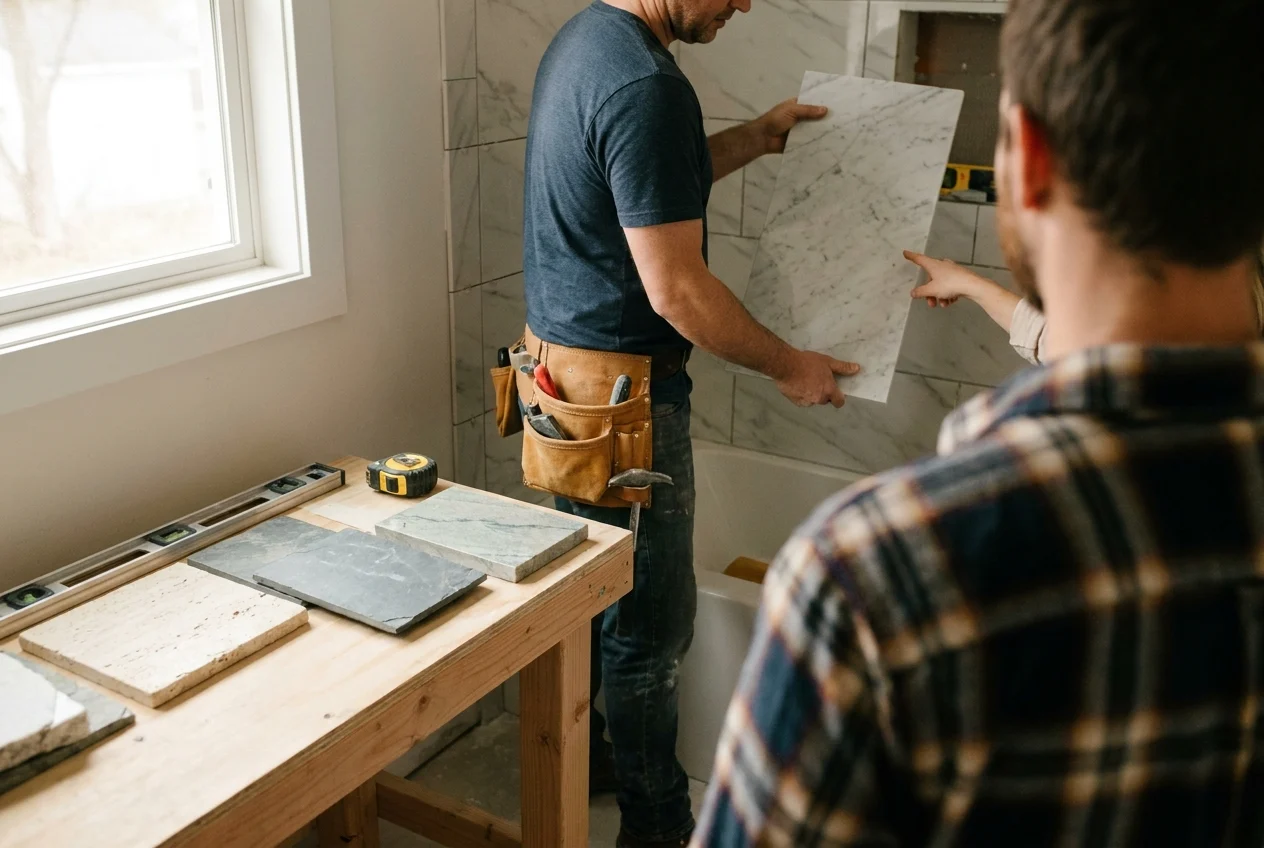
The main drawback is that glass can show fingerprints, water spots, adhesive shadows, or uneven installation more readily than some other materials. It is especially important to use the correct setting materials and an experienced installer, since trowel marks or inconsistent coverage may be visible through translucent tile. Glass tile also needs careful cutting to avoid chipped edges.
Natural Stone
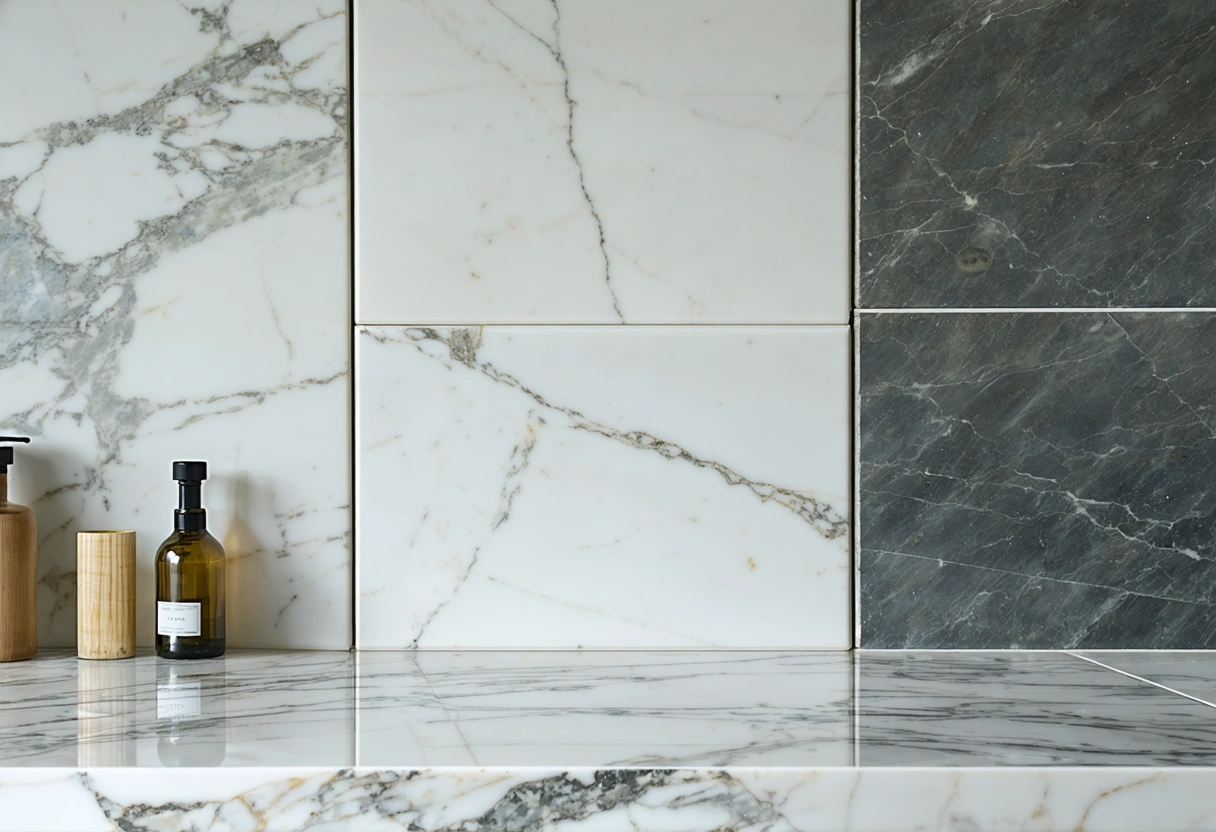
Natural stone brings depth, variation, and a timeless quality that manufactured materials often try to imitate. Marble, travertine, slate, limestone, quartzite, and granite can all be used for backsplashes, either as tile or as a slab. Each piece has unique veining, color shifts, and mineral markings, which can make the backsplash feel custom and organic.
Stone is especially effective when you want warmth and texture. Honed marble can create a soft, classic look in a bathroom. Tumbled travertine can suit a rustic or Mediterranean kitchen. Slate can add dark, earthy character to a modern or farmhouse space. A quartzite or granite slab can make a dramatic statement while reducing grout lines.
The tradeoff is maintenance. Many natural stones are porous and may need sealing to resist staining from cooking oils, makeup, soap, hard water, or acidic foods. Marble and limestone can etch when exposed to acidic substances like lemon juice, vinegar, or some cleaners. If you love the patina that develops with use, stone may be a beautiful choice. If you want a surface that stays pristine with minimal effort, porcelain or glass may be more practical.
Marble Tile and Marble Look Alternatives
Marble deserves special consideration because it is one of the most requested backsplash looks. Real marble offers elegance, subtle movement, and natural variation, but it is not completely carefree. In kitchens, it can stain or etch if splatters are not cleaned promptly. In bathrooms, it can be affected by hard water deposits, cosmetics, and acidic cleaning products.
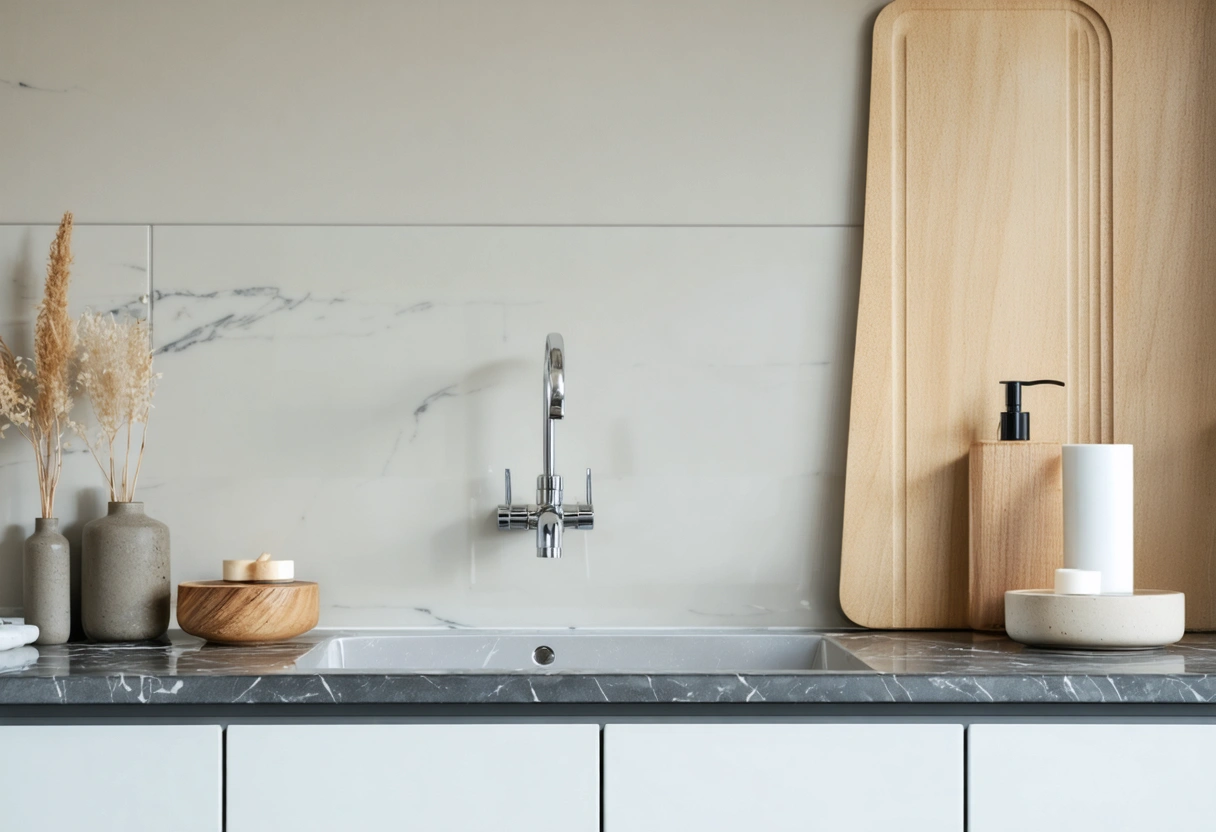
If you want the look of marble without the upkeep, porcelain marble look tile is a practical alternative. Modern porcelain can closely mimic Calacatta, Carrara, and other marble patterns while offering better stain and moisture resistance. This can be especially helpful behind a stove, around a children’s bathroom vanity, or in any space where easy maintenance is a priority.
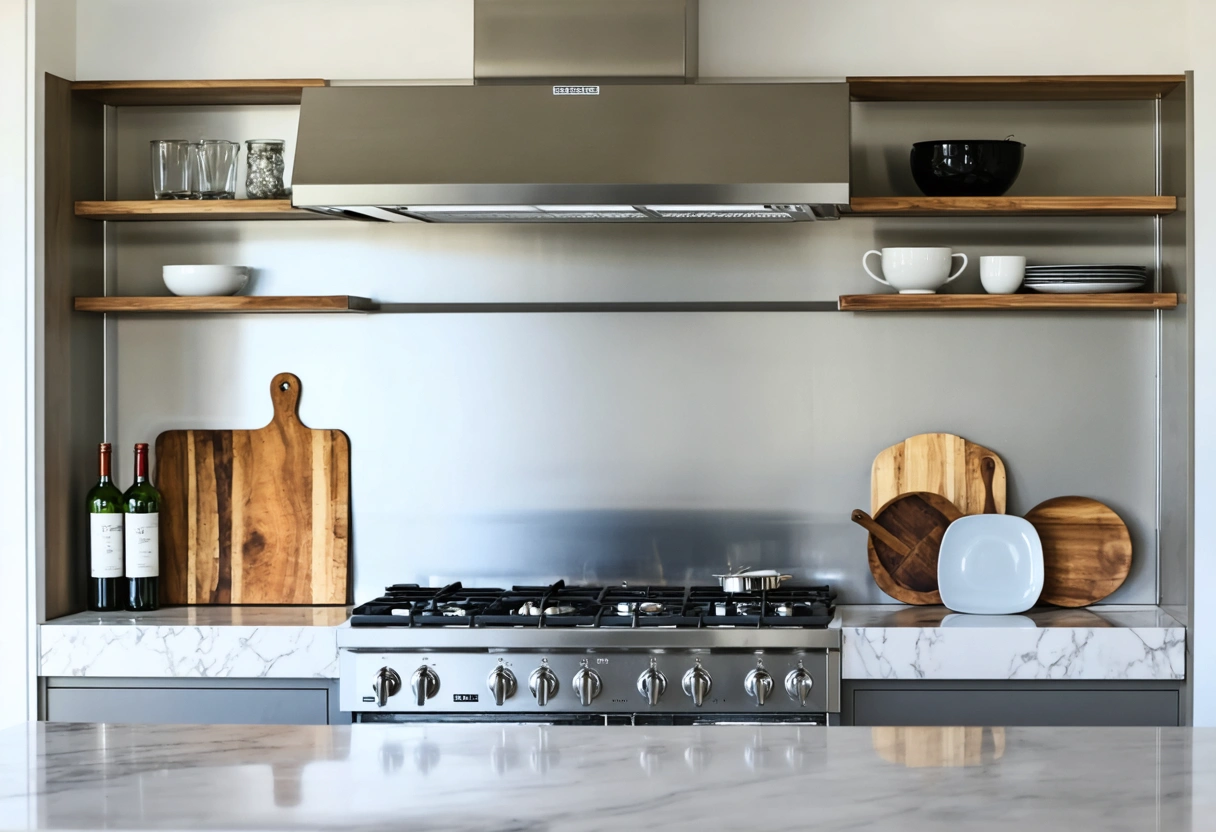
Real marble can still be a worthwhile choice when it is sealed properly and maintained with gentle, stone safe cleaners. It works particularly well in lower splash areas or in spaces where a softer, naturally aged appearance is welcome.
Slab Backsplashes
A slab backsplash uses a large continuous piece of material rather than individual tiles. Common slab materials include quartz, quartzite, marble, granite, porcelain panels, and solid surface products. This approach creates a streamlined look and greatly reduces grout lines, which makes cleaning easier.
Slab backsplashes are often used when the countertop material continues up the wall. This can create a seamless, high end appearance, especially with dramatic veining or a minimalist design. For example, a white quartz countertop with a matching full height backsplash can make a kitchen feel clean and modern. A richly veined stone slab behind a vanity can create a boutique hotel effect in a bathroom.
The main considerations are cost, fabrication, and installation. Slabs are usually more expensive than standard tile and require precise measuring, cutting, and handling. Outlets, windows, shelves, and range hoods must be planned carefully. However, for homeowners who want a low grout, high impact surface, a slab backsplash can be one of the most practical and polished options.
Stainless Steel and Metal
Metal backsplashes are often chosen for their professional, contemporary, or industrial look. Stainless steel is common behind ranges because it handles heat well, resists moisture, and is easy to clean. It pairs naturally with stainless appliances and can make a cooking zone feel efficient and durable.
Other metal options include copper, brass, aluminum, zinc, and metal look tiles. Copper and brass can add warmth and develop a patina over time, while brushed or matte finishes tend to hide fingerprints better than mirror polished surfaces.
Metal can scratch, dent, or show smudges depending on the finish. If you prefer a flawless surface, this may be frustrating. If you like materials that develop character with use, metal can be a distinctive and long lasting choice.
Cement Tile
Cement tile is known for bold patterns, rich colors, and a handcrafted appearance. It can add personality to a kitchen, laundry area, or bathroom vanity wall.
However, cement tile is porous and typically requires sealing before and after installation. It can stain if exposed to oils, colored liquids, makeup, or harsh cleaners.
If you love patterned cement tile but want less maintenance, consider porcelain tile designed to mimic cement patterns. These alternatives offer similar visual impact with improved moisture and stain resistance, which can be useful in busy kitchens and family bathrooms.
Peel and Stick Backsplash Materials
Peel and stick backsplash products can be useful for temporary updates, rental spaces, budget projects, or quick cosmetic refreshes. They are available in vinyl, gel, metal, stone veneer, and thin tile formats.
The biggest advantage is ease of installation. Many peel and stick options can be applied without mortar, grout, or specialized tools. They are also easier to remove than traditional tile in many cases, although removal can still damage paint or drywall depending on the adhesive and wall condition.
Peel and stick materials are not always suitable for high heat, heavy moisture, or long term use. Before installing them behind a stove, near a shower, or around a heavily used sink, check the manufacturer’s heat and water resistance guidelines.
Consider Grout, Sealing, and Long Term Maintenance
The backsplash material itself is only part of the maintenance picture. Grout lines, sealers, surface texture, and cleaning habits all influence how easy the backsplash will be to live with.
In kitchens, areas behind the cooktop and sink usually need the most frequent cleaning. In bathrooms, the vanity backsplash may collect toothpaste, soap, water spots, and hair products.
Choose Grout Carefully
Grout color affects both appearance and maintenance. White or very light grout can create a crisp look, especially with white subway tile, but it may show staining sooner in cooking areas.
<p
High performance grout, epoxy grout, or grout with built in stain resistance can be worth considering for areas that see frequent splashes and scrubbing. These products often cost more than standard cement based grout, but they can reduce staining and make upkeep easier over time.
Understand Sealing Requirements
Some backsplash materials need sealing, while others do not. Glazed ceramic tile, porcelain tile, and glass tile generally do not require sealing on the tile surface, although the grout may still benefit from protection.
Sealing is not a one time solution for every material. Depending on the product, location, and amount of use, it may need to be reapplied periodically.
Match Texture to Cleaning Habits
Texture can make a backsplash more visually interesting, but it can also make cleaning more detailed. A handmade tile with soft surface variation may be easy enough to maintain, while a rough split face stone or deeply textured mosaic can collect grease, dust, soap residue, or hard water deposits.
For a wall behind a cooktop, smoother surfaces are usually more practical. For a powder room vanity or decorative accent area, texture may be less of a concern.
Balance Style With the Rest of the Room
A backsplash should complement the countertops, cabinets, flooring, fixtures, and wall color rather than compete with every other surface. Since it sits at eye level, it can have a major impact on the room’s mood.
Coordinate With Countertops
If your countertop has strong veining, bold movement, or a busy pattern, a simpler backsplash often works best. Solid color ceramic tile, subtle glass tile, or a matching slab can let the countertop remain the focal point.
For example, a plain white quartz countertop can pair beautifully with a handmade blue tile, a patterned cement look porcelain tile, or a marble mosaic.
Think About Tile Size and Pattern
Tile size affects both style and maintenance. Small mosaics create detail and texture, but they also mean more grout lines. Larger tiles or slabs create a cleaner look with fewer joints.
In small bathrooms or compact kitchens, a simple tile shape in a light color can make the space feel more open. In larger rooms, a bold pattern or full height backsplash can add needed visual interest.
Choose a Finish That Fits the Space
Glossy finishes reflect light and are often easy to wipe clean, making them popular for kitchens and bathrooms. Matte finishes feel softer and more understated, but they may show oils, fingerprints, or water marks depending on the material.
If the room already has many shiny surfaces, such as polished countertops, chrome fixtures, and glossy cabinets, a matte or satin backsplash can add balance.
Factor in Budget and Installation
Backsplash costs can vary widely based on material, tile size, pattern complexity, wall preparation, and labor. A simple ceramic tile installed in a standard running bond pattern is usually more affordable than a natural stone mosaic, handmade tile, or slab installation.
Installation complexity can also affect the final result. Small mosaics, intricate patterns, glass tile, and large format panels often require more skill. Uneven walls, many outlets, inside corners, open shelves, and window cutouts can add time and cost.
Decide Where to Spend
If your budget is limited, focus spending where the backsplash is most visible. You might use a simple field tile for most of the wall and reserve a more decorative material for a range area, vanity niche, or accent strip.
For long term value, it is often better to choose a durable, well installed moderate material than a delicate high end material that does not suit the room’s use.
Make the Final Choice Based on Lifestyle
The right backsplash material is the one that supports how you actually live. If you cook often and want fast cleanup, porcelain, ceramic, glass, stainlesssteel, quartz, or another low maintenance slab material may be the best fit.
For a bathroom, think about the amount of water exposure and the type of products used near the backsplash. A guest powder room can often support more decorative or delicate materials, while a primary bath or children’s bathroom may benefit from nonporous tile, stain resistant grout, and easy to clean surfaces.
Ask Key Questions Before You Commit
Before making a final decision, it helps to compare your options with a few practical questions. Will this material be easy to clean after the most common messes in the room?
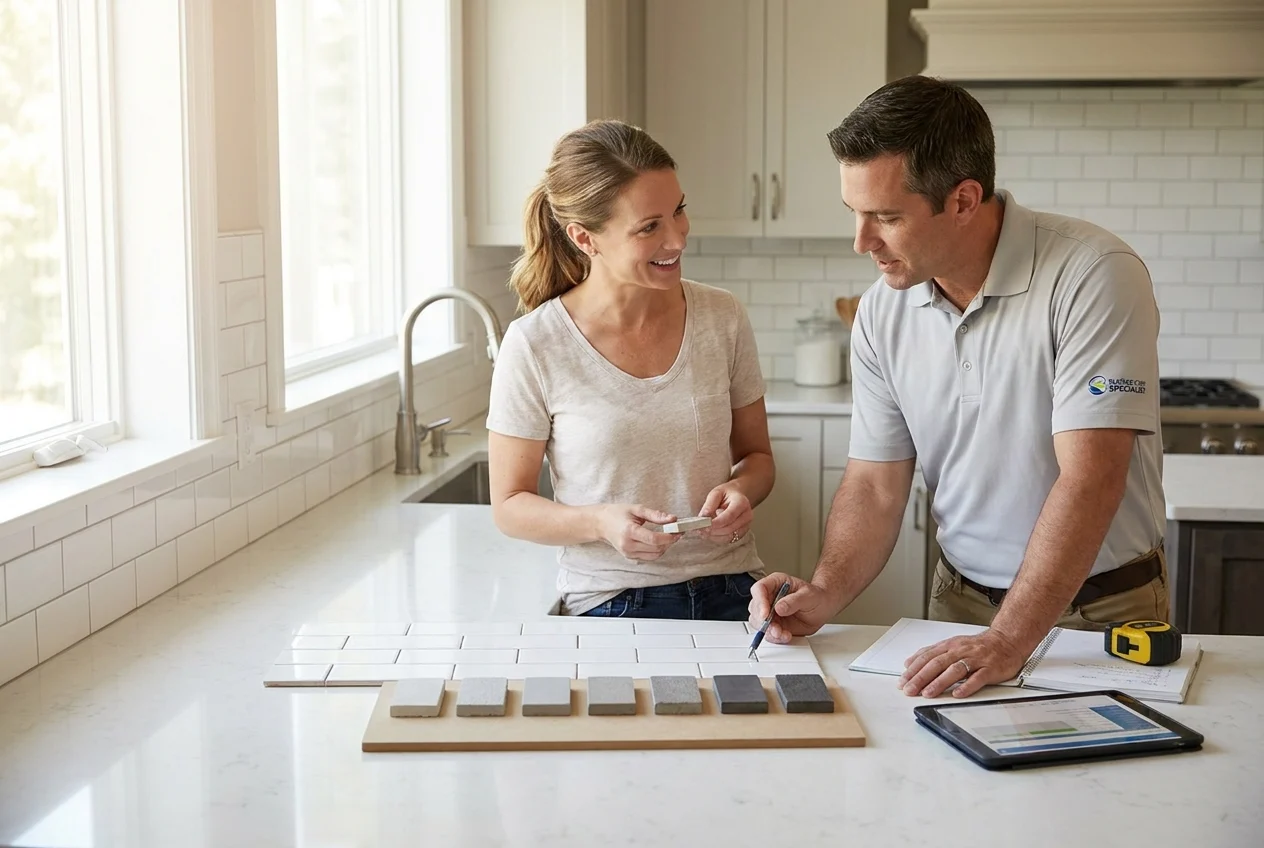
It is also wise to view samples in your actual room before ordering. Lighting can change the way a backsplash material looks throughout the day.
Plan for a Backsplash That Lasts
A successful backsplash blends appearance, performance, and maintenance into one thoughtful choice. Ceramic and porcelain tile offer dependable versatility, glass adds brightness, natural stone brings organic beauty, slabs minimize grout, metal handles heat with a distinctive look, and patterned materials create personality.
By choosing a material that fits the demands of your kitchen or bathroom, you can create a backsplash that protects the wall, supports your daily routine, and adds style you will enjoy for years.
Need help with How to Choose the Right Backsplash Material for Your Kitchen or Bathroom?
</p